
Quick answer: AC not working? If your air conditioner isn’t cooling, check these in order: (1) the thermostat and indoor blower, (2) the air filter, (3) the condensate drain line and float switch, (4) the evaporator coil for ice or dirt, (5) the age of the unit, (6) whether the outdoor condenser fan and compressor are running, and (7) the breaker and capacitor. Many problems are a clogged filter, a full drain line, a tripped breaker, or a bad capacitor. If you’re not comfortable with any step, call a certified HVAC technician. In the Corpus Christi area, you can call Justice Incorporated.
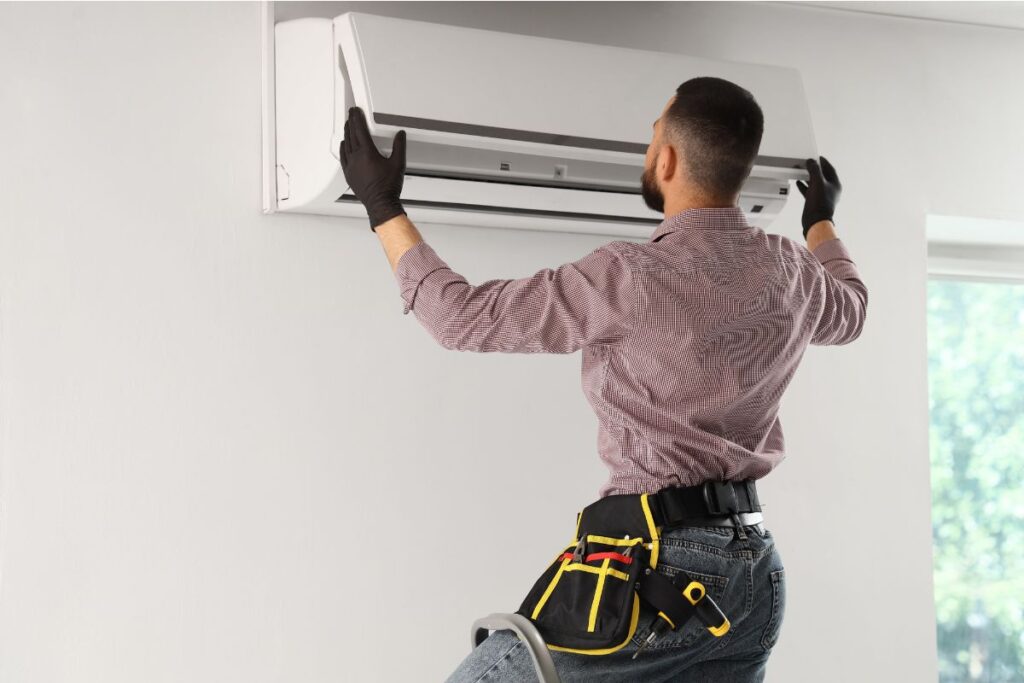
Before You Start: Safety First
- Turn off power at the thermostat and the breaker before you touch anything inside the unit.
- Never put your hands inside the outdoor unit while it has power.
- Capacitors can hold a dangerous electrical charge even after the power is off. If you don’t have electrical experience, leave capacitor work to a professional.
Step 1: Check the Thermostat and Indoor Blower Motor
Start at the thermostat to make sure the system responds.
1. Set the thermostat to Cool, or set the fan to On.
2. Listen and feel for air at the vents. The indoor blower motor should start running.
3. Turn the system off and back on to see whether it responds the same way each time.
What it means: If the blower runs, your thermostat and indoor fan are working, so move to Step 2. If nothing happens, check the thermostat batteries, the settings, and your breaker (see Step 7).
Step 2: Check the Air Filter
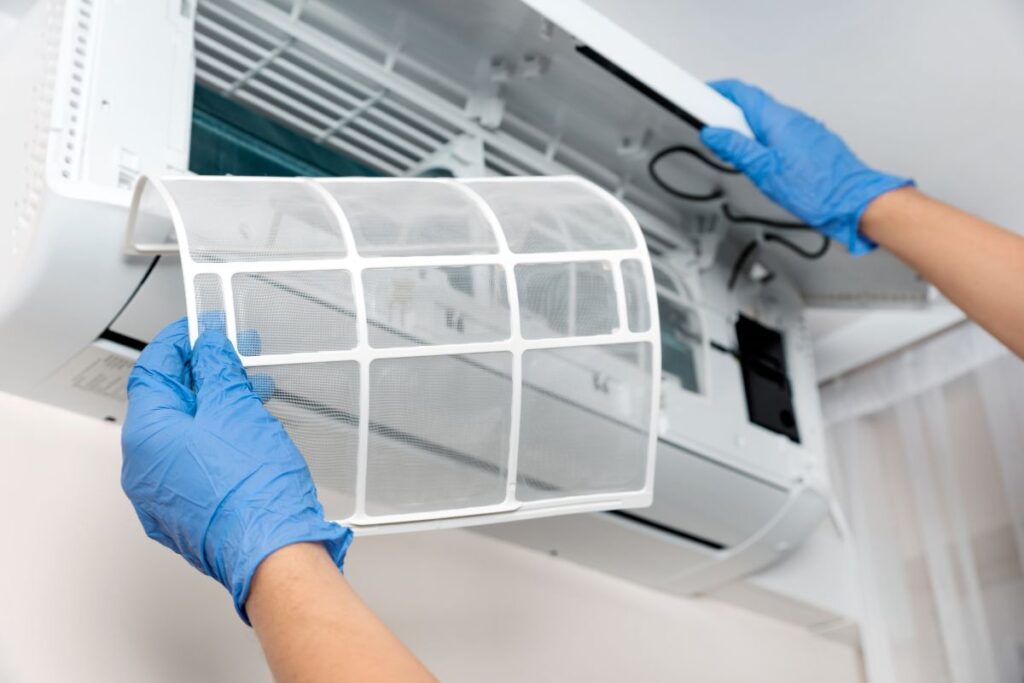
Find your air filter. It’s usually in a return air grille or next to the indoor unit.
- Clean filter: Move to the next step.
- Dirty or clogged filter: Replace it. A clogged filter blocks airflow, which can cause poor cooling and a frozen coil.
Tip: Check your filter every month, and replace it every 1 to 3 months depending on the filter type, pets, and dust.
Step 3: Check the Condensate Drain Line and Float Switch
Your AC removes moisture from the air, and that water drains through a PVC pipe. Many systems have a small float switch on the drain line. It shuts the AC off when water backs up so your home doesn’t flood.
1. Find the PVC drain line near the indoor unit and look for the small float switch device.
2. Pop off the cap or top of the PVC cleanout.
3. Check for standing water.
What it means:
- No standing water: The drain is probably clear, and the float switch should also be empty.
- Standing water or a clog: Use a wet/dry shop vac to suck the water and debris out of the drain line. You can do this from the outside end of the line, or blow the line out. Once the water clears, the float switch may reset and let the AC run again.
If the line keeps clogging, call a certified HVAC technician.
Step 4: Check the Evaporator Coil for Ice or Dirt
The evaporator coil sits inside your indoor unit. It’s made of aluminum or copper tubing with thin metal fins. You can check it without taking anything apart.
1. Hold your phone camera under the coil, point it up, and take a picture or video.
2. Look at the photo.
What it means:
- Frozen (ice or frost on the coil): Turn the system to Off and set the fan to On so the ice melts. Don’t chip at the ice. A frozen coil usually means poor airflow (often a dirty filter) or low refrigerant, so call a technician.
- Very dirty (you can’t see the fins or coils): A dirty coil blocks airflow and cuts cooling. Coil cleaning should be done by a technician.
- Clean and dry: Move to the next step.
Step 5: Find Out How Old Your AC Unit Is
Knowing your unit’s age helps you decide whether to repair it or replace it.
1. Find the data plate, a sticker on the side of the indoor or outdoor unit.
2. Take a picture of it, including the brand, model number, and serial number.
3. Search the brand and serial number online. Most manufacturers put the manufacture date in the serial number.
What it means:
- Fairly new: It may still be under warranty, so check before you pay for repairs.
- 12 to 14 years or older: The unit is near the end of a typical lifespan. Big repairs may cost more than they’re worth, so ask your technician about replacement.
Step 6: Turn the Cooling Back On and Listen to the Outdoor Unit

1. Go back to the thermostat, set it to Cool, and set the temperature a few degrees below room temperature.
2. Wait about 5 minutes. Many systems have a built-in delay before the outdoor unit starts.
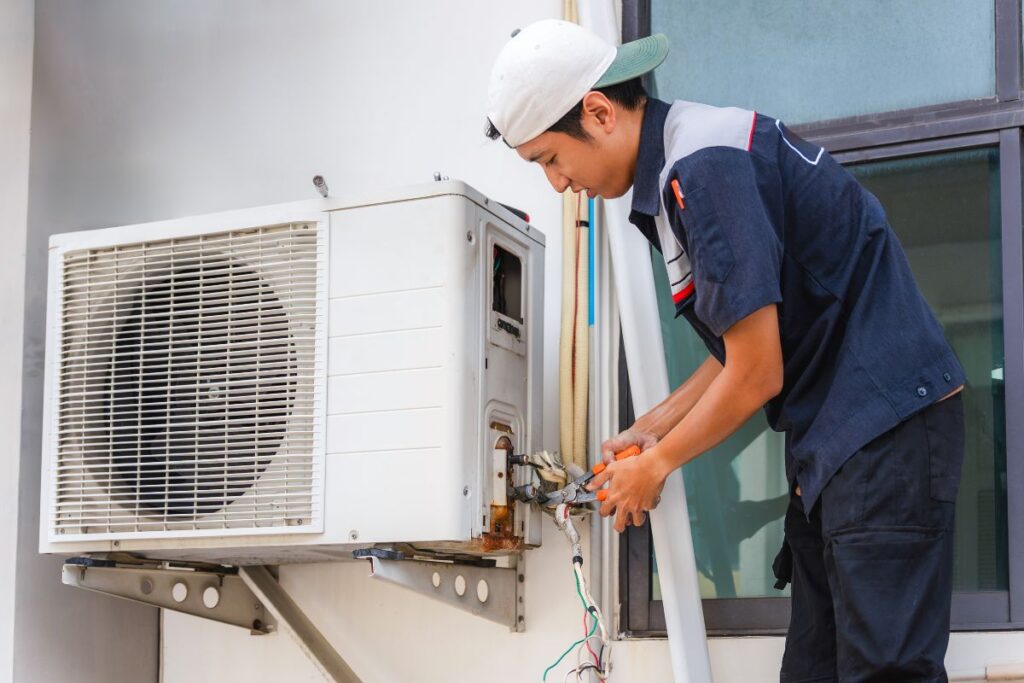
3. Walk outside to the outdoor unit (the condensing unit) and listen for two distinct sounds:
- The condenser fan motor: the fan on top of the outdoor unit should be spinning.
- The compressor: a steady hum or running sound from inside the unit.
What it means:
| What you see and hear | Likely cause | What to do |
| Fan spinning and compressor running, but the house isn’t cooling | Possibly low refrigerant or a leak | Call a certified HVAC technician |
| Nothing spinning, just a buzzing sound (like a dying bug) | Bad capacitor, or a power problem | Go to Step 7 |
| Nothing spinning and no sound at all | Breaker or high-voltage power may be off | Go to Step 7 |
Step 7: Check the Breaker and the Capacitor
Check the Breaker
1. Go to your electrical panel and find the AC or condenser breaker.
2. If it’s tripped, turn it fully off, then back on.
3. Check the outdoor disconnect box next to the unit and make sure it’s on.
If the breaker trips again, stop and call a technician. That points to an electrical problem.
Check the Capacitor (for homeowners with electrical experience only)

The capacitor helps start the compressor and fan motor. A failed capacitor is one of the most common reasons an AC buzzes but won’t start, and it’s usually an easy, low-cost repair.
1. Turn off the breaker and the outdoor disconnect. Confirm there’s no power going to the unit.
2. Remove the side service panel on the outdoor unit.
3. Look at the capacitor. It’s a metal cylinder, often silver. If the top is swollen, bulging, or leaking, the capacitor is most likely bad.
4. Warning: Capacitors can keep a charge even with the power off. Discharge it safely before you touch the terminals, or let a professional do it.
5. Take a picture of the wires on the capacitor terminals before you disconnect anything, so you can reconnect them correctly.
6. Write down the ratings printed on the capacitor (microfarads/µF and voltage) and buy an exact match. Home improvement stores like Home Depot often carry AC capacitors.
When to Call a Certified HVAC Technician
Call a professional if:
- Any of these steps feel complicated or unsafe
- The outdoor unit runs but your home still isn’t cooling (possible low refrigerant)
- The coil is frozen or very dirty
- The breaker keeps tripping
- The drain line keeps clogging
- You’re not comfortable working around high voltage or capacitors
Call Justice Incorporated
Justice Incorporated is here to help diagnose and repair your air conditioning system if you are a homeowner in Corpus Christi or the surrounding areas. If this guide didn’t solve the problem, or you’d rather have a professional handle it, contact us at justiceincorporated.com.
Frequently Asked Questions
Why is my AC running but not cooling?
The most common causes are a dirty air filter, a dirty or frozen evaporator coil, low refrigerant, or an outdoor unit that isn’t running. Check the filter first, then check whether the outdoor fan and compressor are running.
Why is my outdoor AC unit buzzing but not running?
A buzzing outdoor unit with no fan movement often points to a bad capacitor. It can also mean an electrical problem. Turn off the power and call a technician if you aren’t experienced with electrical work.
Why did my AC shut off with water in the drain line?
Many systems have a float switch that shuts the AC off when the condensate drain line backs up. Clearing the line with a wet/dry shop vac often fixes it.
How do I know how old my AC unit is?
Find the data plate sticker on the unit, take a picture of the serial number, and search the brand and serial number online. Most manufacturers put the manufacture date in the serial number.
How long should it take for my outdoor AC unit to turn on?
Many systems have a built-in delay of about 5 minutes before the outdoor unit starts after you change the thermostat.
When should I replace my AC instead of repairing it?
If your unit is 12 to 14 years old or older and needs a major repair, replacement is often the better value. A certified technician can help you decide.
Justice Incorporated | justiceincorporated.com

Another quality article by Justice Inc. Home and Commercial Services team.
Call (361) 888-8881 for fast and reliable service!